
 Roofing Services
Best Kitchen and Bathroom Renovations
The best kitchen and bathroom renovations usually come down to one thing: making daily life easier without overspending on features that look good for six months and feel dated after two years. If you’re updating a home in the greater Houston area, the smartest remodel is one that improves function first, holds up to real use, and still helps your property stand out when it’s time to sell.
Kitchen and bath projects get the most attention because they do the most work. These are the rooms that take the most wear, the most moisture, and the most traffic. They also tend to be the first places buyers and guests notice when a home feels old, cramped, or poorly maintained.
That does not mean every remodel needs a full gut job. In a lot of homes, the best result comes from improving layout, storage, surfaces, and finishes without moving every wall or changing every plumbing line. A practical renovation can look custom, feel fresh, and stay within budget if the plan is built around how the space actually gets used.
What makes the best kitchen and bathroom renovations
A good remodel photographs well. A great remodel works better every day.
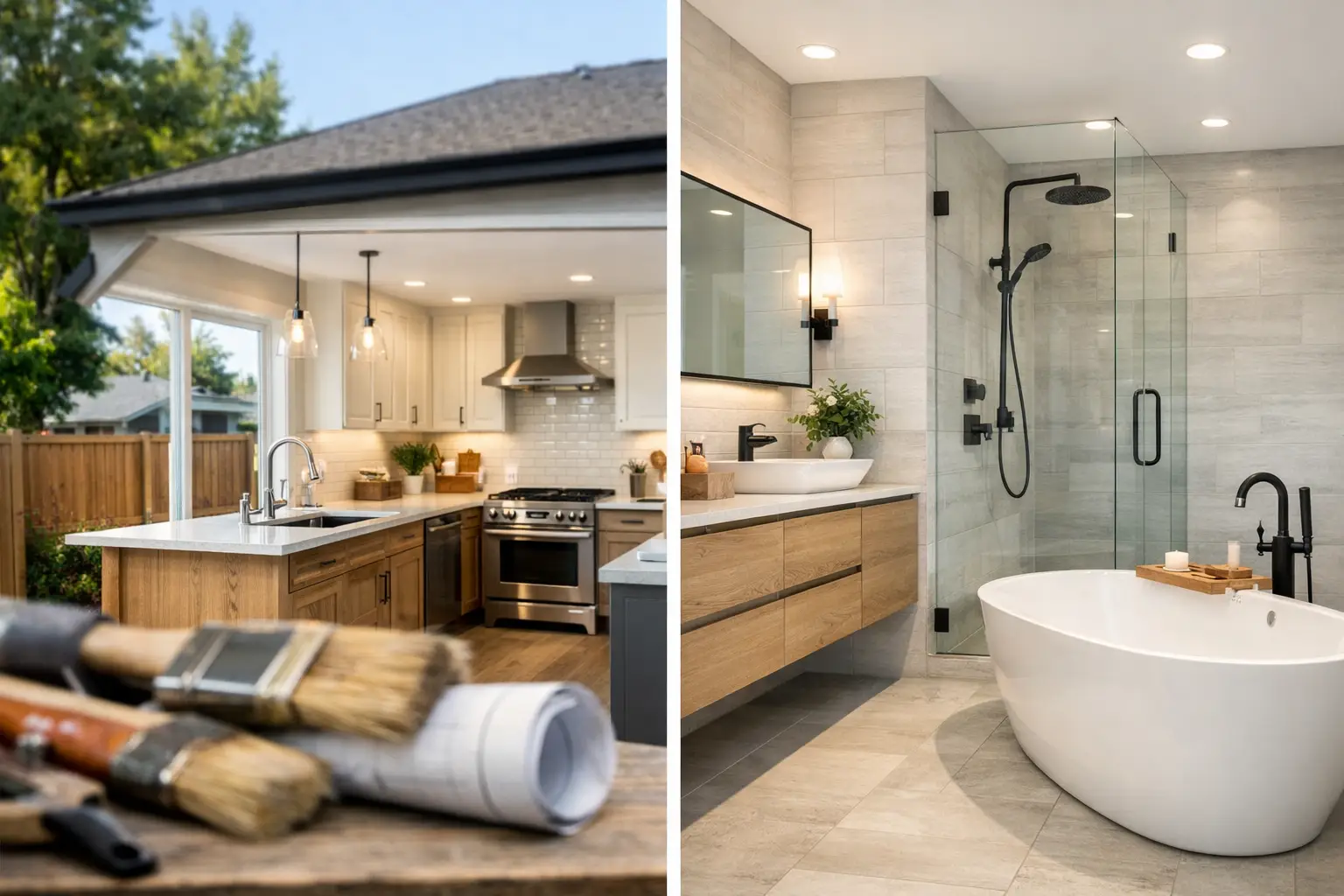
That means the best kitchen and bathroom renovations are not just about trend pieces. They balance appearance, durability, maintenance, and resale value. In kitchens, that usually means strong cabinet layouts, enough counter space, quality flooring, lighting that helps with real tasks, and finishes that can handle spills, heat, and heavy traffic. In bathrooms, it means moisture-resistant materials, smart storage, safe flooring, solid ventilation, and fixtures that feel clean and reliable year after year.
The best projects also respect the home itself. A remodel should fit the size, style, and value range of the property. Overspending in one room while the rest of the house still needs attention can create a mismatch that does not pay off. On the other hand, cutting too many corners in high-use rooms can leave you with repairs and frustration not long after the work is done.
Start with function before finishes
Homeowners often begin with paint colors, tile patterns, and fixture styles. Those details matter, but they should come after the big decisions. The layout, storage plan, traffic flow, and material choices will shape whether the renovation feels worth it.
In a kitchen, ask simple questions. Is there enough prep space near the sink? Are cabinets hard to reach? Does the room feel crowded when more than one person is using it? Are appliances placed where they make sense, or just where they happened to fit years ago?
In a bathroom, think about what slows you down every morning. Maybe the vanity is too small, the shower is awkward, or there is nowhere to store towels and everyday items. Sometimes a small layout adjustment solves more problems than an expensive finish package ever could.
This is where working with a contractor that understands full-service remodeling helps. When one team can handle flooring, drywall, painting, trim, fixture updates, and the surrounding repair work, it is easier to create a finished space that feels complete instead of pieced together.
The kitchen upgrades that usually pay off
The kitchen is where function and appearance have to meet in the middle. Most owners want a space that feels updated, but the real return comes from improvements people use every day.
Cabinet upgrades tend to deliver more impact than homeowners expect. If the boxes are solid, refinishing or refacing may make sense. If the layout is poor or the cabinets are worn out, replacement is often the better long-term move. Soft-close doors, deeper drawers, and better pantry storage can change the way a kitchen works without making it feel overbuilt.
Countertops matter too, but not every project needs the most expensive option on the market. The right choice depends on the household. A busy family may prioritize stain resistance and low maintenance. A rental or investment property may need a more budget-conscious surface that still looks clean and current.
Flooring is another area where practical decisions win. Kitchens need surfaces that can handle dropped utensils, spills, foot traffic, and regular cleaning. The best-looking floor is not always the best one for a home with kids, pets, or frequent entertaining.
Lighting is often overlooked, even though it changes everything. A kitchen can have new cabinets and counters and still feel dim or unfinished if the lighting is weak. Good task lighting over work zones and balanced overhead lighting can make a remodel feel more polished without adding unnecessary complexity.
The bathroom renovations that improve daily use
Bathrooms are smaller, but mistakes show up faster. Poor ventilation, the wrong materials, bad drainage, and weak storage can make a bathroom feel tired almost immediately.
Vanity upgrades are often one of the best investments because they improve both storage and appearance. A vanity that actually fits the space can reduce clutter and make the room feel more organized. In shared bathrooms, dual sinks may help. In smaller bathrooms, one well-designed sink with better counter space may be the smarter choice.
Showers are another major decision point. A larger walk-in shower can make a bathroom feel more open and modern, but it has to be built right. Tile selection, slope, waterproofing, and glass layout all affect how it performs. A tub-shower combo may still be the better option in a family home or a property where resale flexibility matters.
Tile and flooring should be chosen with maintenance in mind. Some finishes look high-end in a showroom and become a hassle in everyday use. Textured surfaces can improve slip resistance, but too much texture can also trap dirt and be harder to clean. That is why balance matters.
Ventilation is not the glamorous part of a bathroom remodel, but it is one of the most important. Without proper moisture control, even a beautiful renovation can start showing wear early.
Best kitchen and bathroom renovations on a real budget
A realistic budget does not mean settling for poor results. It means knowing where quality matters most.
If funds are limited, spend money on the parts that are hardest to replace later. In kitchens, that often means cabinetry, layout improvements, and durable flooring. In bathrooms, it usually means waterproofing, tile work, proper installation, and fixtures that hold up over time.
Cosmetic details can still create a strong finish. Paint, hardware, mirrors, backsplashes, and lighting can help a room feel custom without driving the budget out of range. The key is not trying to imitate a luxury remodel with low-grade materials in high-stress areas.
It also helps to avoid constant change orders once work starts. A clear plan, material selections made early, and honest conversations about cost can prevent delays and budget creep. That is especially important for homeowners juggling several property improvements at once.
How to choose a contractor for the best kitchens bathroom renovations
Price matters, but price alone should not decide the job. The lowest bid can get expensive if it leaves behind unfinished details, weak craftsmanship, or scheduling problems.
Look for a contractor that communicates clearly, explains the scope in plain language, and can handle more than one part of the project. Kitchen and bathroom remodels often involve drywall, painting, flooring, trim, demolition, and repairs beyond the visible upgrade. A team with broad hands-on experience can keep the process moving and reduce the need to coordinate multiple companies.
For many property owners, that convenience is a major advantage. It saves time, reduces confusion, and makes it easier to hold one company accountable for the finished result. That is a big reason local owners choose full-service contractors like GottaCallMAC for renovation work. They want dependable craftsmanship, fair pricing, and one reliable source from start to finish.
You should also pay attention to how a contractor talks about trade-offs. A trustworthy professional will not say yes to every idea without question. They will explain when a layout change makes sense, when a material may not hold up, and when a simpler option is actually the better investment.
Renovate for your life, not just the listing photos
A remodel should add value, but value is not only about resale. It is also about living in a home that works better every day.
If you cook often, put your money into layout, storage, and surfaces that support that routine. If your bathroom always feels cramped before work or school, focus on flow and organization. If you are updating a rental or preparing a home for market, choose durable, broadly appealing finishes instead of highly personal design choices.
The best kitchens and bathroom renovations do not try to do everything at once. They solve the right problems, use materials that make sense, and stay grounded in how the property is actually used. When the work is planned well and built to last, the result is not just a nicer-looking room. It is a home that feels easier to live in from the moment the job is done.
